Level 1 vs. Level 2 Charging for Everyday Driving
Understanding Your Home Charging Options
For anyone who drives an electric vehicle, the question of how to charge at home comes up early. The two standard options are Level 1 and Level 2 charging. Each serves a different driving pattern and home electrical setup, and picking the right one can make daily life noticeably more convenient. This article compares the two approaches so you can see which fits your routine, without getting into brand names or company recommendations.
What Level 1 Charging Offers
Level 1 charging uses a standard 120-volt household outlet, the same kind you plug a lamp or phone charger into. Every EV comes with a Level 1 charging cable, so there is no extra equipment to buy. You simply plug the car into a wall outlet, and the onboard charger in the vehicle draws power at a rate of roughly 3 to 5 miles of range per hour. For someone who drives fewer than 30 or 40 miles a day and can leave the car plugged in overnight, Level 1 can be perfectly adequate. The car will be fully charged by morning for most commutes.
The main advantage is simplicity. There is no need for an electrician, no new circuit, and no upfront cost beyond the car itself. If you have a garage or driveway with an accessible outlet, you can start charging the same day you bring the car home. For plug-in hybrids with smaller battery packs, Level 1 often covers the electric-only range without issue. It also works well for households where the EV is not the primary vehicle and sits parked for long stretches.
However, Level 1 charging has clear limits. In cold weather, battery efficiency drops, and the charging rate slows further. If you arrive home late with a nearly empty battery and need the car early the next day, Level 1 may not replenish enough range. It also ties up the outlet for many hours, which can be inconvenient if the same outlet is used for other things. For households with multiple EVs or higher daily mileage, Level 1 quickly becomes impractical.
What Level 2 Charging Brings
Level 2 charging operates at 240 volts, the same voltage used by an electric dryer or oven. It delivers power at 20 to 60 miles of range per hour, depending on the charger and the vehicle's onboard capacity. A typical Level 2 charger can fully replenish a standard EV battery overnight, often in 4 to 8 hours. This speed makes it the preferred choice for most EV owners who drive more than a short commute or who want the flexibility to top up quickly between trips.

Installing a Level 2 charger requires a dedicated circuit and a compatible electrical panel. The charger itself is a wall-mounted unit that connects to the vehicle via a charging cable. Many units come with smart features such as scheduling, energy monitoring, and remote control through a phone app. These can help you charge during off-peak electricity hours or track how much energy the car uses.
The biggest benefit of Level 2 is convenience. You can arrive home with a low battery, plug in, and have enough range for the next day's driving in a few hours. Even if you forget to plug in one evening, a quick charge session the next morning can cover your needs. For households with two EVs, Level 2 charging makes it practical to share a single charger or install two units without overwhelming the home's electrical capacity.
Comparing the Trade-Offs
Choosing between Level 1 and Level 2 comes down to your driving habits, home electrical setup, and budget for installation. Level 1 is the low-cost, low-effort entry point. If your daily driving is modest and you have a reliable outlet, it may serve you well for years. Level 2 requires an upfront investment in equipment and installation, but it offers speed and flexibility that Level 1 cannot match.
One factor many people overlook is the condition of their home's electrical system. An older home with a full electrical panel may need an upgrade before adding a dedicated circuit for a Level 2 charger. This is where a load calculation becomes important. An electrician can determine whether the existing panel and circuit breaker can handle the additional load of a Level 2 charger without tripping or overheating. In some cases, the panel may need a sub-panel or a service upgrade. This is not a do-it-yourself job; a qualified professional should handle any work on the electrical panel, circuit breaker, or conduit.
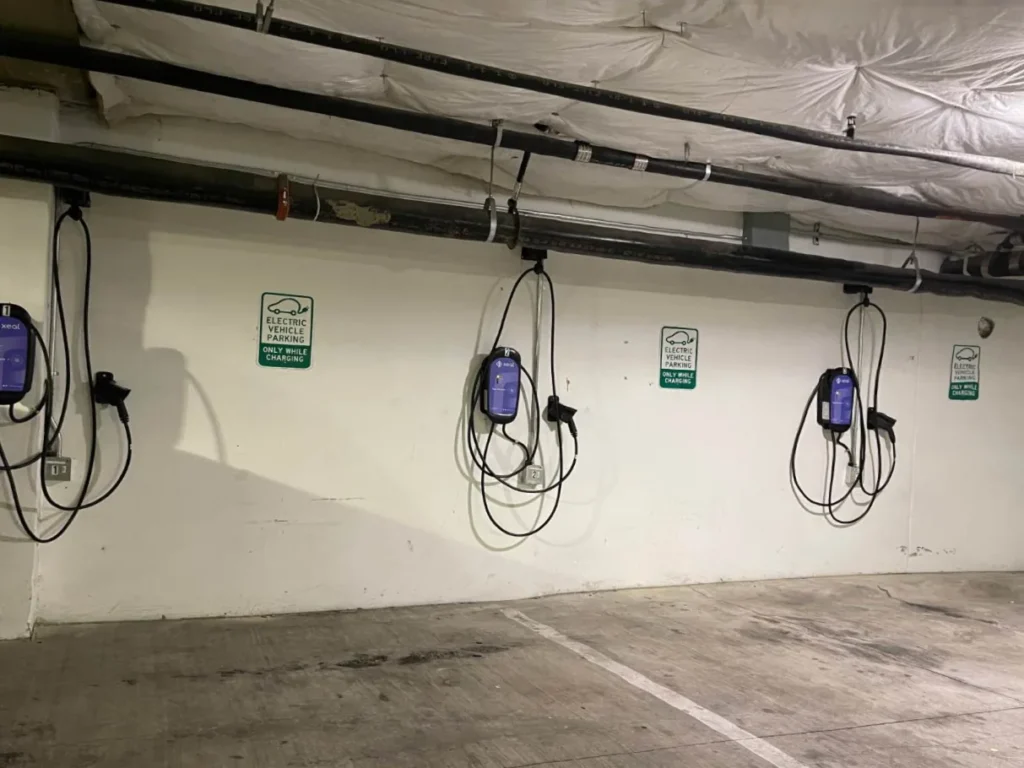
Another consideration is the charging cable itself. Level 1 cables are thin and flexible, while Level 2 cables are thicker and heavier. The connector at the vehicle end is the same for both levels, so you can use either cable with the same car. However, Level 2 chargers are usually wall-mounted, keeping the cable tidy and off the ground. Proper grounding is essential for both levels to ensure safe operation, especially in a garage where moisture or dust may be present.
For many households, the practical choice is to start with Level 1 and see if it meets your needs. If you find yourself waiting too long for a charge or running short on range, a home EV charger installation can be arranged later. The process involves selecting a suitable location for the charger, running conduit if needed, and having the dedicated circuit installed by a licensed electrician. Once in place, Level 2 charging transforms the EV ownership experience from something that requires planning into something that feels as effortless as parking.
It is also worth noting that some utility companies offer incentives for installing Level 2 chargers, which can offset part of the cost. Checking with your local utility before scheduling the work is a smart step. Even without incentives, the convenience of faster charging often pays for itself in time saved and reduced reliance on public charging stations.
Making Your Decision
The right choice depends on your specific situation. If you drive less than 30 miles on an average day and can leave the car plugged in for 10 to 12 hours overnight, Level 1 charging is likely sufficient. You can enjoy the benefits of electric driving without any additional home electrical work. If your daily driving is longer, if you have multiple EVs, or if you simply want the peace of mind that comes with faster charging, Level 2 is the better fit. The upfront cost of a home EV charger installation is an investment in daily convenience and future-proofing your home for electric transportation.

In the end, both Level 1 and Level 2 charging have their place. Level 1 is the practical starting point for light users. Level 2 is the upgrade that makes electric driving work seamlessly for heavier use. Understanding your own driving patterns and the capacity of your home's electrical system will guide you to the right choice. Whether you stay with Level 1 or move to Level 2, having a dedicated place to charge at home removes the biggest hurdle to enjoying an electric vehicle day after day.
Ends · GARAGECHARGEGUIDE